Rectal Prolapse Treatment and Surgery
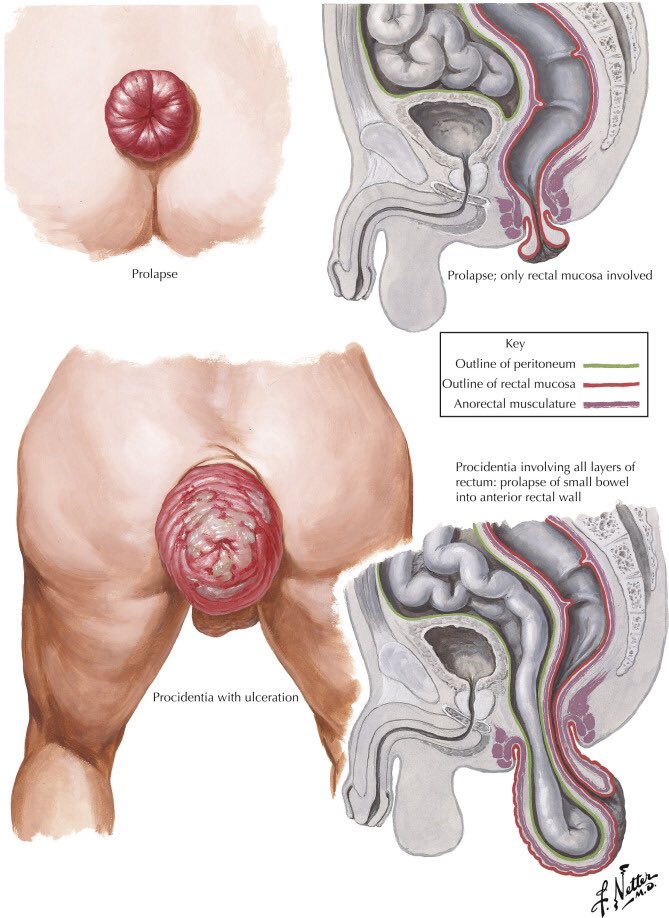
In adults with symptomatic full-thickness rectal prolapse, surgery is usually the definitive treatment. Fiber, stool regulation, constipation treatment, and pelvic floor care may reduce associated symptoms, but they do not permanently correct a full-thickness prolapse.
The operation is individualized. A colon and rectal surgeon considers the type and extent of prolapse, constipation, fecal incontinence, pelvic floor function, previous abdominal or pelvic surgery, overall health, and the patient’s treatment goals before recommending an abdominal or perineal repair.
For general information about the condition, see Rectal Prolapse. If you are mainly trying to identify symptoms, visit Rectal Prolapse Symptoms.
What Are the Treatment Options for Rectal Prolapse?
Treatment can be divided into two broad categories:
- Non-surgical symptom management
- Surgical correction of the prolapse
For adults with full-thickness external rectal prolapse, non-surgical measures can improve bowel habits and comfort but generally do not correct the underlying anatomic prolapse.
Surgical treatment is typically performed through either:
- An abdominal approach, most commonly involving rectopexy
- A perineal approach, performed through the anus and perineum
The best option is not the same for every patient.
Can Rectal Prolapse Be Treated Without Surgery?
Non-surgical treatment may help control symptoms while a patient is being evaluated or when surgery must be delayed.
Measures may include:
- Increasing dietary fiber gradually
- Drinking adequate fluids
- Treating chronic constipation
- Using stool-softening or laxative therapy when medically appropriate
- Managing chronic diarrhea
- Avoiding repeated straining
- Limiting prolonged toilet sitting
- Protecting irritated skin around the anus
- Pelvic floor therapy in selected patients with associated pelvic floor dysfunction
These measures can be valuable because constipation, straining, diarrhea, and pelvic floor dysfunction may worsen symptoms.
However, they should not be presented as a cure for an established full-thickness rectal prolapse.
Read more: Can Rectal Prolapse Be Treated Without Surgery?
When Is Surgery Needed for Rectal Prolapse?
Surgery should be discussed when rectal prolapse is symptomatic, recurrent, or interfering with bowel function or quality of life.
Common reasons to consider surgical repair include:
- Rectal tissue repeatedly protrudes through the anus
- The prolapse occurs with most bowel movements
- The prolapse is becoming larger or more frequent
- Tissue must be manually pushed back inside
- Bleeding or mucus drainage persists
- Constipation or incomplete emptying is worsening
- Stool leakage or fecal incontinence is present
- The prolapse interferes with hygiene, walking, exercise, work, travel, or daily activities
- Symptoms persist despite treatment of constipation or diarrhea
A reducible prolapse is not necessarily an emergency, but recurrent full-thickness prolapse usually deserves colorectal surgical evaluation rather than indefinite observation.
For a detailed discussion, see When Is Surgery Needed for Rectal Prolapse?.
Rectal Prolapse Surgery: Abdominal vs Perineal Repair
Most operations fall into one of two approaches.
| Approach | How it is performed | Examples | Important considerations |
|---|
| Abdominal repair | The rectum is repositioned and secured from within the abdomen | Suture rectopexy, ventral rectopexy, resection rectopexy in selected patients | Often performed laparoscopically or robotically when appropriate; bowel function and previous surgery influence procedure selection |
| Perineal repair | The prolapsed rectum is treated through the anus/perineum | Perineal rectosigmoidectomy (Altemeier), Delorme procedure | May be considered according to prolapse length, overall health, operative risk, anatomy, and surgeon judgment |
There is no single operation that is best for every patient. Procedure selection requires balancing recurrence risk, bowel function, operative risk, and individual anatomy.
What Is Rectopexy?
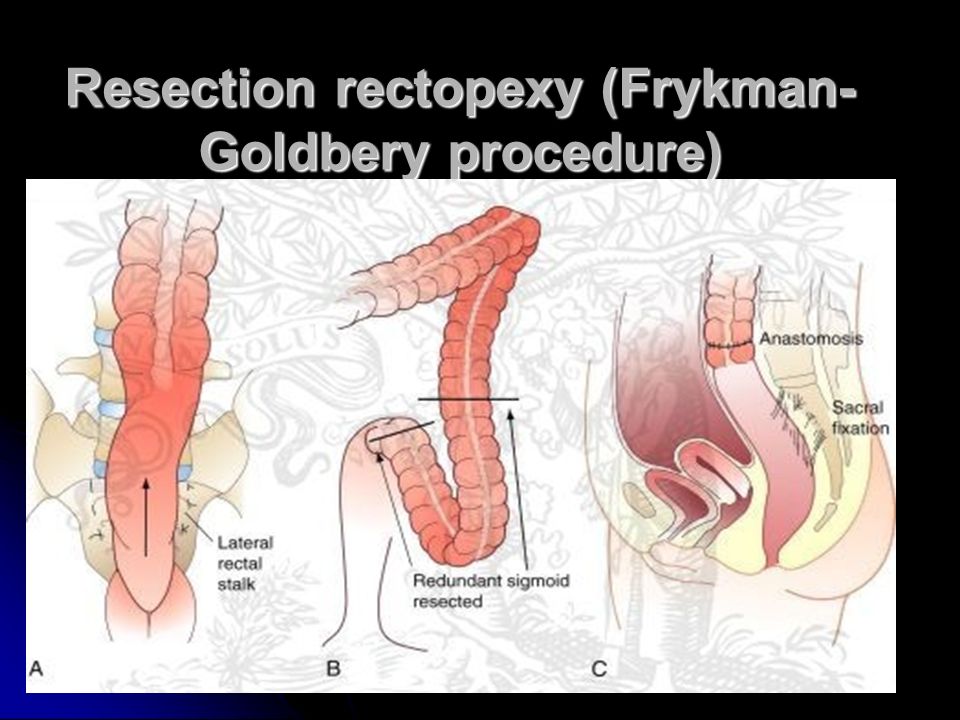
Rectopexy is an abdominal operation in which the rectum is returned to its normal position and secured within the pelvis.
Depending on the clinical situation, rectopexy may be performed:
- Laparoscopically
- Robotically
- Through an open abdominal operation in selected circumstances
Different rectopexy techniques use different planes of dissection and methods of fixation.
Suture Rectopexy
In a suture rectopexy, the rectum is mobilized and secured within the pelvis using sutures.
Ventral Rectopexy
Ventral rectopexy uses an anterior approach to support and elevate the rectum. A reinforcing material may be used depending on the procedure and individual patient factors.
Resection Rectopexy
In selected patients—particularly when significant constipation and a redundant sigmoid colon are relevant to the operative plan—a portion of the sigmoid colon may be removed in addition to rectal fixation.
The correct operation depends heavily on pre-existing bowel function. A procedure that is appropriate for a patient with severe constipation may not be the best choice for a patient whose main problem is fecal incontinence.
What Is Perineal Rectosigmoidectomy?
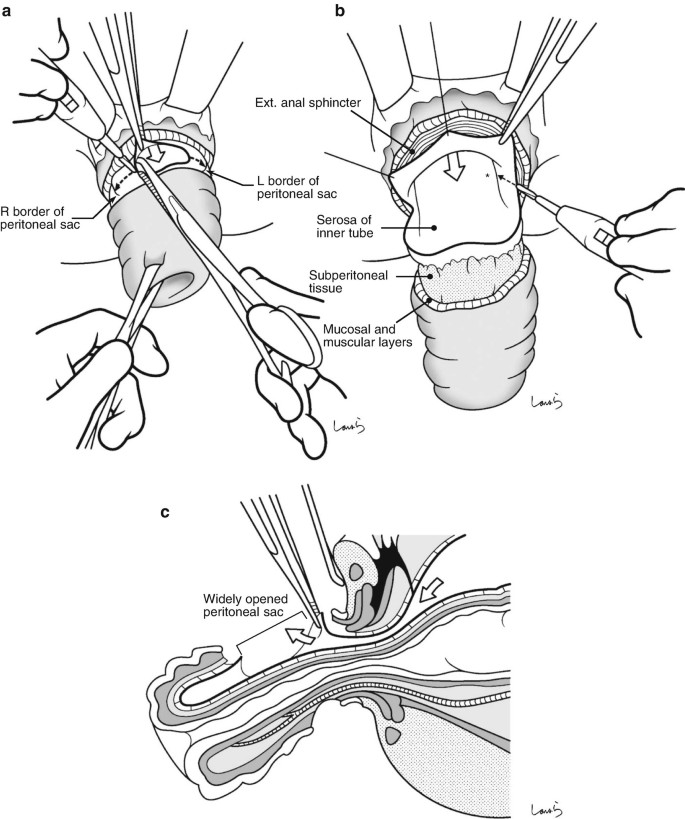
A perineal rectosigmoidectomy, also known as an Altemeier procedure, removes the prolapsed segment through a perineal approach rather than through the abdomen.
This may be considered based on:
- Overall medical condition
- Anesthetic and operative risk
- Length and anatomy of the prolapse
- Previous surgery
- Bowel function
- Surgeon assessment and patient goals
Another perineal operation, the Delorme procedure, removes the prolapsed rectal mucosa and folds the underlying muscle. It may be considered for selected patients with a shorter segment of full-thickness prolapse.
For a broader procedural overview, see Rectal Prolapse Procedures.
Which Rectal Prolapse Surgery Is Best?
There is no universal “best” rectal prolapse operation.
A colorectal surgeon considers:
- Whether the prolapse is full-thickness, mucosal, or internal
- Length and severity of the prolapse
- Constipation
- Obstructed defecation
- Fecal incontinence
- Pelvic floor dysfunction
- Previous abdominal or pelvic operations
- Other pelvic organ prolapse
- Age, frailty, and overall health
- Anesthetic risk
- Patient priorities
- Surgeon experience with the available procedures
This is why the treatment decision should be based on an individualized colorectal evaluation rather than the name of a procedure alone.
How Do Constipation and Fecal Incontinence Affect Treatment?
Rectal prolapse often occurs together with bowel-function problems, and these symptoms can influence surgical planning.
Constipation
Patients may experience:
- Difficult evacuation
- Repeated straining
- A sensation of incomplete emptying
- Obstructed defecation
- Longstanding constipation
Severe constipation may require additional evaluation before surgery because some surgical techniques can affect postoperative bowel function.
Fecal Incontinence
Full-thickness rectal prolapse can stretch the anal sphincter complex and interfere with normal continence.
Many patients with incontinence related to the prolapse experience some improvement after the prolapse is corrected, although the degree of recovery varies. Longstanding sphincter or nerve dysfunction may persist and may require additional management.
Learn more about fecal incontinence.
What Evaluation Is Needed Before Rectal Prolapse Surgery?
Treatment starts by confirming exactly what type of prolapse is present.
A colorectal evaluation may include:
- Detailed bowel and pelvic-floor history
- Examination of the anus and rectum
- Examination while straining when needed
- Digital rectal examination
- Assessment of anal sphincter function
When the prolapse is not easily reproduced in the office, additional testing may be useful.
Defecography
Fluoroscopic or MRI defecography shows what happens to the rectum and pelvic floor during evacuation. It may identify internal prolapse or associated pelvic floor abnormalities.
Anorectal Manometry
Anorectal manometry evaluates sphincter pressures, rectal sensation, and aspects of pelvic floor function. It may be useful when constipation, obstructed defecation, or fecal incontinence is prominent.
Colonoscopy
Colonoscopy may be recommended before surgery based on symptoms, bleeding, age, screening history, and the need to evaluate the colon before an operative repair.
Not every patient needs every test.
For more details, visit Rectal Prolapse Procedures.
Rectal Prolapse or Hemorrhoids?
Rectal prolapse can be mistaken for prolapsing hemorrhoids because both may cause tissue to protrude through the anus.
They are different conditions:
- Full-thickness rectal prolapse involves the rectal wall and typically forms concentric folds.
- Prolapsing hemorrhoids arise from hemorrhoidal tissue in the anal canal and generally have a different pattern of prolapse.
Treatment is also different. Hemorrhoid procedures do not repair a full-thickness rectal prolapse.
See Rectal Prolapse vs Hemorrhoids for a detailed comparison.
Is Rectal Prolapse Surgery an Emergency?
Most rectal prolapse surgery is planned electively.
However, seek urgent medical evaluation when:
- The prolapse cannot be pushed back inside
- The prolapsed tissue becomes dark, dusky, purple, gray, or black
- Severe or rapidly worsening pain develops
- Swelling prevents reduction
- Heavy bleeding occurs
- You develop fainting, marked weakness, fever, or significant illness
A prolapse that becomes trapped outside the anus can lose its blood supply and requires urgent assessment.
Read more: Is Rectal Prolapse an Emergency?
What Is Recovery Like After Rectal Prolapse Surgery?
Recovery depends on:
- The procedure performed
- Abdominal versus perineal approach
- Minimally invasive versus open surgery
- Overall health
- Baseline bowel function
- Presence of constipation or fecal incontinence
- Whether another pelvic-floor procedure is performed at the same time
After surgery, treatment commonly focuses on protecting the repair and promoting comfortable bowel movements.
Patients may receive individualized instructions regarding:
- Activity
- Pain control
- Diet
- Fiber
- Stool-softening medications
- Avoiding constipation and excessive straining
- Follow-up visits
Bowel function may continue to change after the prolapse has been corrected. Improvement in continence or evacuation is not necessarily immediate.
For recovery-specific information, see Rectal Prolapse Surgery Recovery.
Can Rectal Prolapse Come Back After Surgery?
Recurrence is possible after any rectal prolapse operation.
Risk varies according to:
- Type of repair
- Prolapse anatomy
- Previous prolapse surgery
- Pelvic floor function
- Overall tissue support
- Constipation and straining
- Other patient-specific factors
The goal is therefore not simply to “push the rectum back in.” A durable treatment plan should also address bowel function and the factors contributing to symptoms.
Rectal Prolapse Treatment in Phoenix, Arizona
If rectal prolapse repeatedly protrudes through the anus, requires manual reduction, causes bleeding or mucus drainage, or affects constipation, bowel control, or daily activities, a colorectal surgical evaluation can clarify the diagnosis and treatment options.
Aisha Akhtar, MD, FASCRS, FACS is a board-certified colon and rectal surgeon who evaluates and treats rectal prolapse and other colorectal and pelvic-floor conditions for patients in Phoenix, Scottsdale, Glendale, and surrounding Arizona communities.
During the consultation, treatment is individualized according to the prolapse anatomy, bowel function, health status, previous surgery, and patient goals.
Schedule a Rectal Prolapse Evaluation
Frequently Asked Questions
What is the best treatment for rectal prolapse?
For symptomatic full-thickness rectal prolapse in adults, surgery is generally the definitive treatment. The best operation depends on the type of prolapse, bowel function, overall health, previous surgery, and other pelvic-floor findings.
Can rectal prolapse heal without surgery?
Full-thickness rectal prolapse does not usually correct itself with fiber, laxatives, pelvic floor therapy, or other conservative treatment. These measures may improve constipation, straining, irritation, or other associated symptoms.
When does rectal prolapse require surgery?
Surgery should be discussed when prolapse is recurrent or persistent, requires manual reduction, causes bleeding or mucus drainage, contributes to constipation or fecal incontinence, or interferes with quality of life.
What surgery is used for rectal prolapse?
Common options include abdominal rectopexy and perineal procedures such as perineal rectosigmoidectomy or the Delorme procedure. The operative approach is individualized.
Is robotic surgery available for rectal prolapse?
Rectopexy may be performed using minimally invasive laparoscopic or robotic techniques when appropriate. The surgical approach depends on anatomy, prior surgery, medical condition, and surgeon judgment.
Is rectopexy major surgery?
Rectopexy is an abdominal operation. Although many rectopexy procedures can be performed minimally invasively, the risks, recovery, and expected benefits should be discussed individually with the operating surgeon.
Can rectal prolapse surgery improve fecal incontinence?
Bowel control may improve after the prolapse is corrected, especially when incontinence is related to the prolapse holding the sphincter open. Improvement varies, and longstanding nerve or sphincter dysfunction may persist.
Can surgery make constipation worse?
Bowel function can change after rectal prolapse surgery, and certain operative techniques may be more suitable than others when significant constipation is present. Preoperative bowel-function assessment is therefore important.
Rectal prolapse is generally evaluated and surgically treated by a colon and rectal surgeon with specialized training in diseases of the colon, rectum, anus, and pelvic floor.
Medical Review & Editorial Standards
This page was developed to provide patient-centered information about rectal prolapse treatment and surgical decision-making.
Clinical authorship
Dr. Aisha Akhtar, MD, FASCRS, FACS is a board-certified colon and rectal surgeon with expertise in colorectal and anorectal disorders, including rectal prolapse.
Clinical framework
The content is aligned with established clinical guidance and patient-education principles from authoritative colorectal and digestive-disease organizations, including:
- American Society of Colon and Rectal Surgeons (ASCRS)
- National Institute of Diabetes and Digestive and Kidney Diseases (NIDDK)
These sources support the core principles presented on this page:
- Adult full-thickness rectal prolapse is generally corrected surgically.
- Nonoperative treatment may improve associated constipation, fecal incontinence, pain, or irritation but does not anatomically repair full-thickness prolapse.
- Surgical planning should account for prolapse anatomy, bowel function, comorbidities, previous surgery, and patient goals.
- Abdominal and perineal approaches are both used, with procedure selection individualized to the patient.
- An irreducible prolapse or prolapse with compromised tissue requires urgent medical evaluation.
Last medically reviewed: August 17, 2026
This page provides general educational information and does not replace an individualized medical examination, diagnosis, or treatment recommendation.